Designing Builds
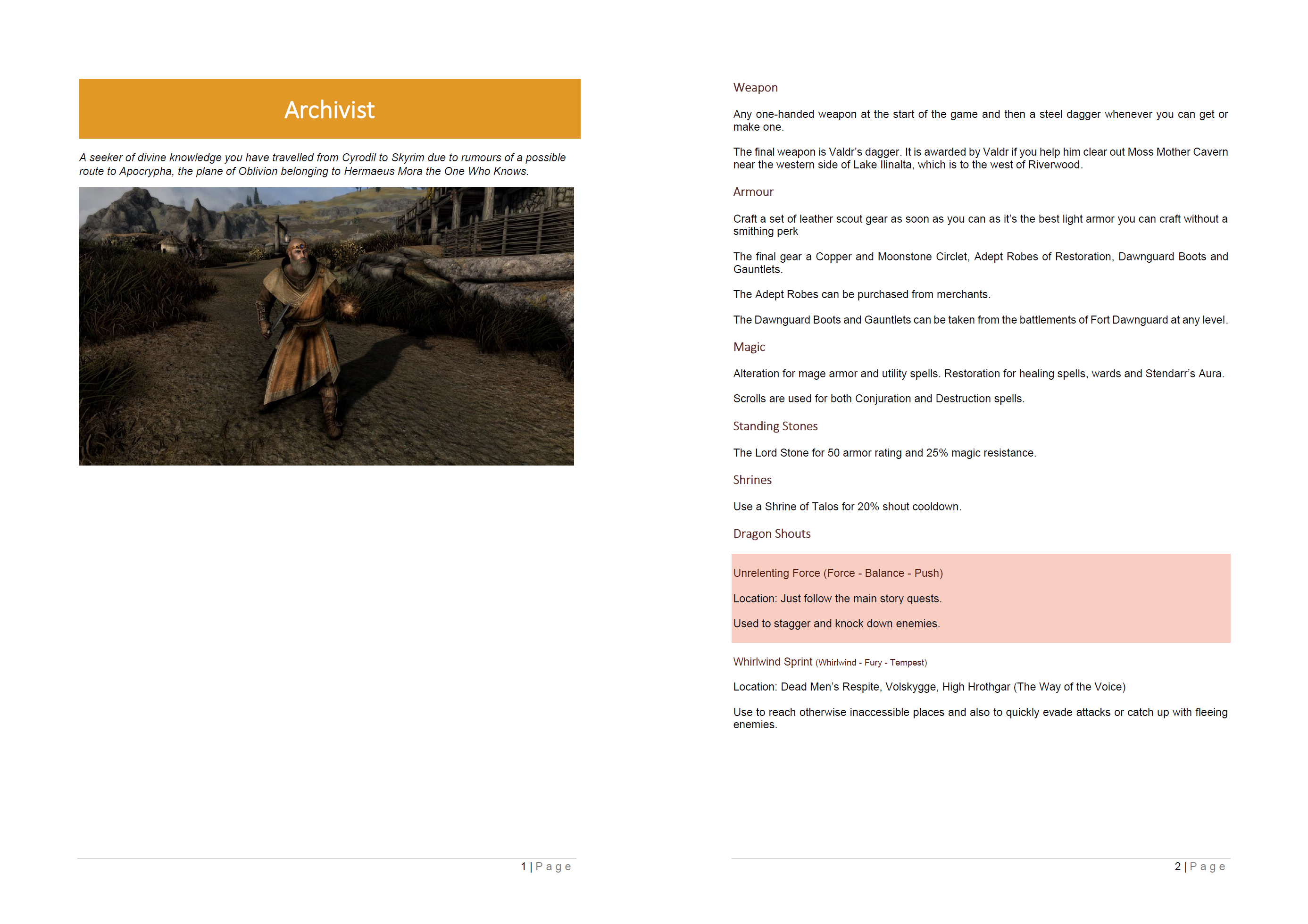
I thought that it might be useful or interesting, for some at least, to share the various stages that I go through when creating a build. I've been using the same approach for some time now and it's actually quicker for me to design builds than it is to play test them. I'll be using the latest build that I finished writing yesterday, at the time of writing this article, to go through the stages of creating the build and where the inspiration came from in the first place.
Rough Notes
This is the very early concept of a build and I jot down notes on key points to later add more detail for the build and flesh it out a lot more.
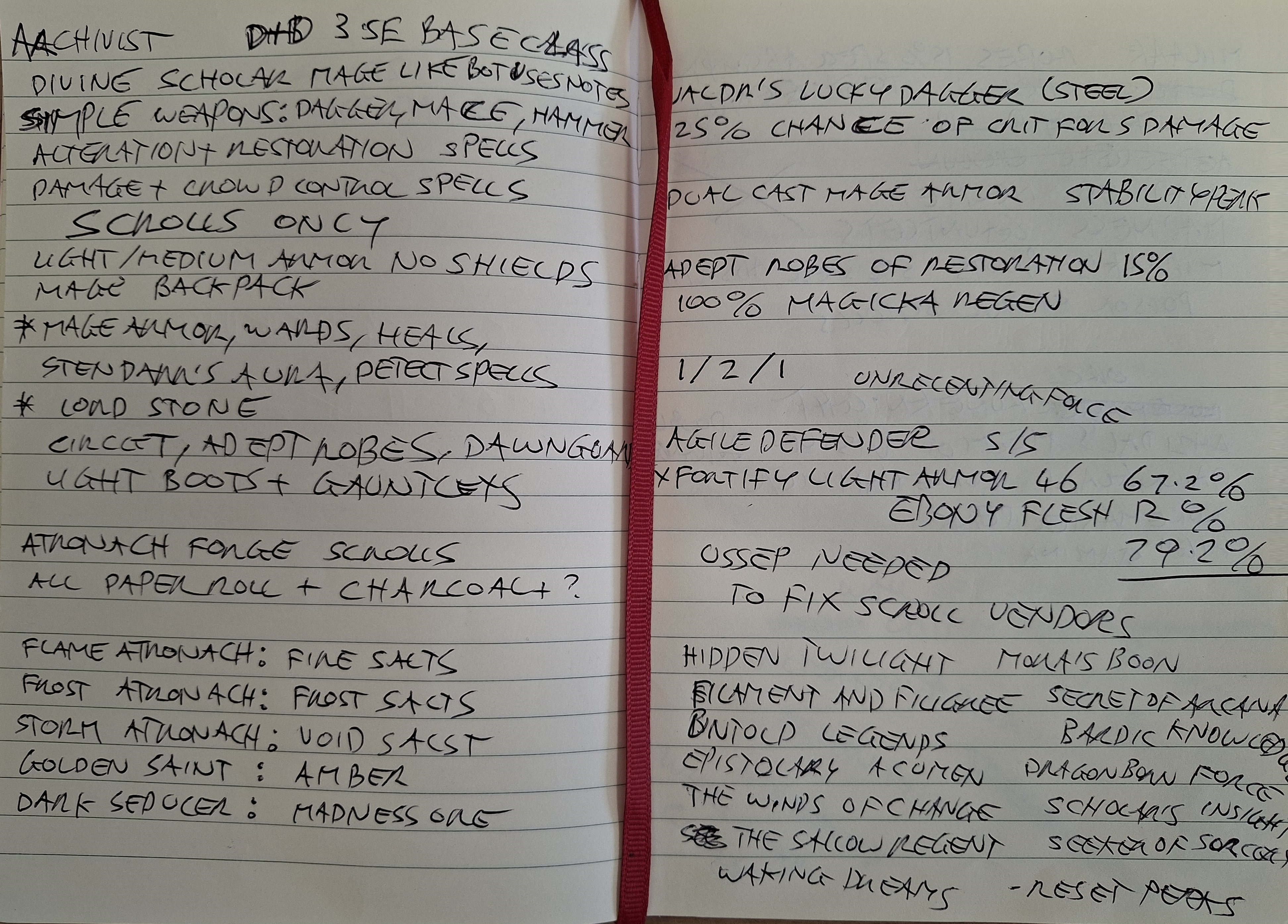
The inspiration for the Archivist is a Dungeons and Dragons 3.5e base class of the same name. This is bascially a cleric that follows the mage model. This class attracted me because they search for forbidden knowledge and that immediately made me think of Hermaous Mora and the Black Books found in Apocrypha. Another factor that attracted me to this class is that the spells are prepared in a prayerbook, which is filled by seeking out new spells and this got me thinking about using scrolls for the build with spells that are defensive being cast as normal. This makes it an Alteration and Restoration build.
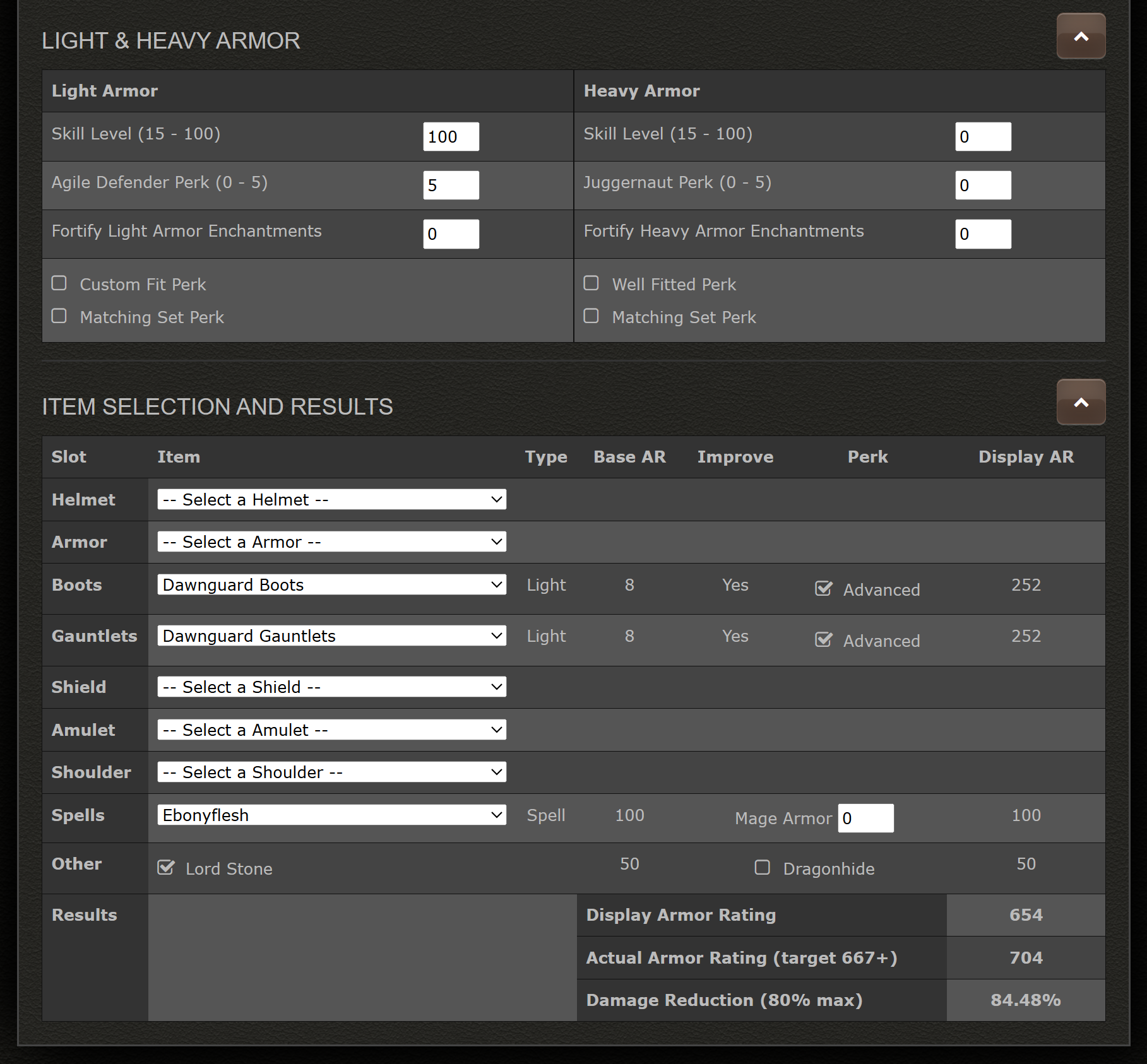
The next stage was to do an armor rating check to see whether it get to or close to the damage reduction cap of 80%. When I wrote my notes I didn't have my armor rating tool created and was using a spreadsheet. The maths in the spreadsheet was based on the data in the equations for Smithing Quality and Armor Raing on UESP but the equations didn't follow the standard left to right approach with addition and subtraction being of equal weight and multiply and divide being of equal weight so the maths was wrong. This gave me a Smithing Quality level of 36 instead of 46 in my spreadsheet. I obviously noticed that I was getting better armor rating values in the game but didn't know why. The armor rating tool uses the correct maths and I was able to drop the Fortify Light Armor enchantment to free it up for something else and still hit the damage reduction cap with mage armor spells. My intention was to always use mage armor spells.
Build Ideas
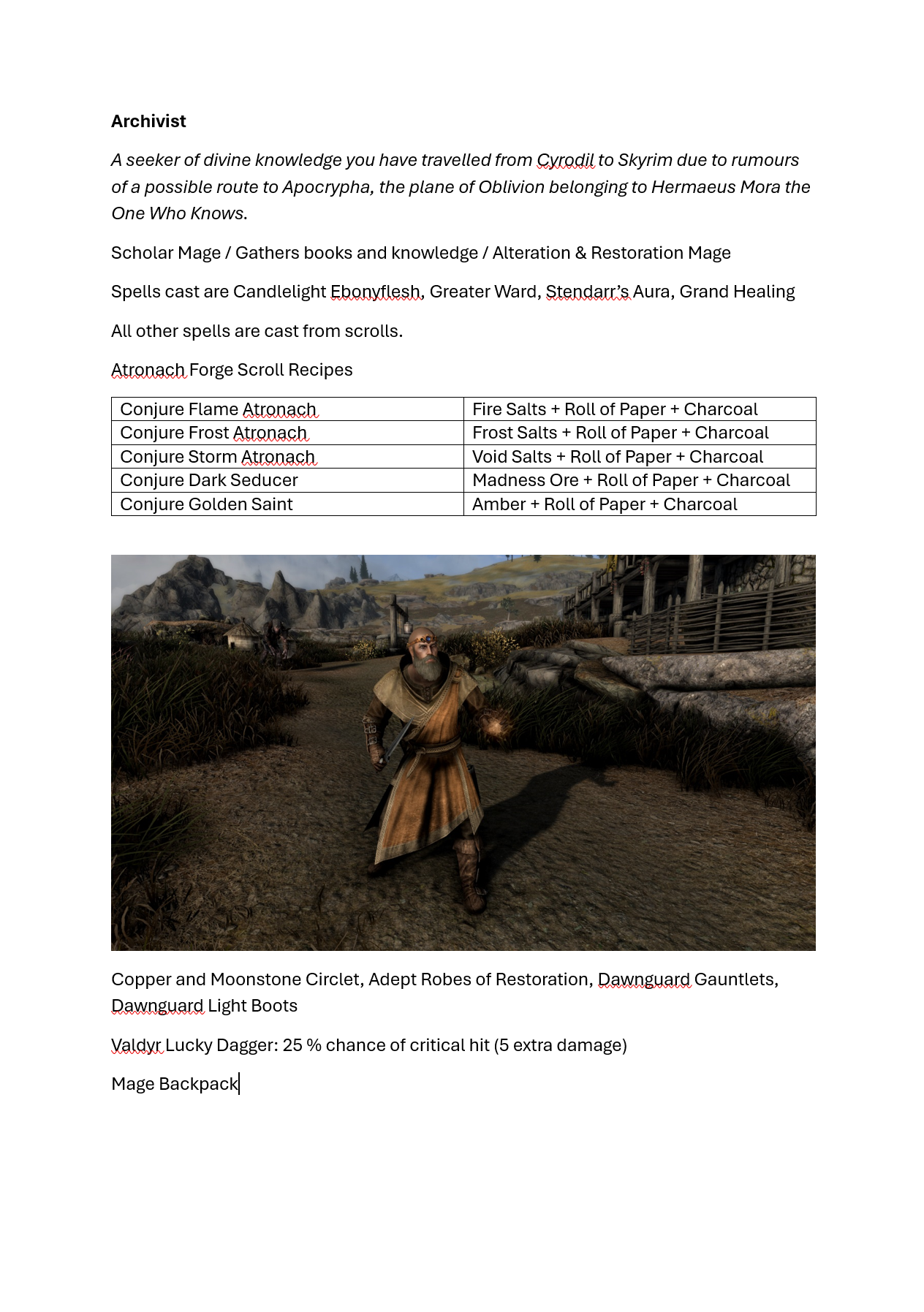
I have a word document where I try to flesh out the build beyond the rough notes and I also create a screenshot of the build in the game so that I can check that visually it works and also that if there is any clipping of the gear that it's of a tolerable amount. I do this using an old save file or if currently play testing a build I take my charcter to Goldenhills Plantation, save the game and start tweaking the player character.
Appearance
I play on PC so I use Racemenu to change the race, gender and overall appearance of the player character. If I'm not using an existing preset I make a new one or modify an existng one and save it as a new preset. This allows me to quickly recreate the look on a character when I play test them. Although I do sometimes make them again.
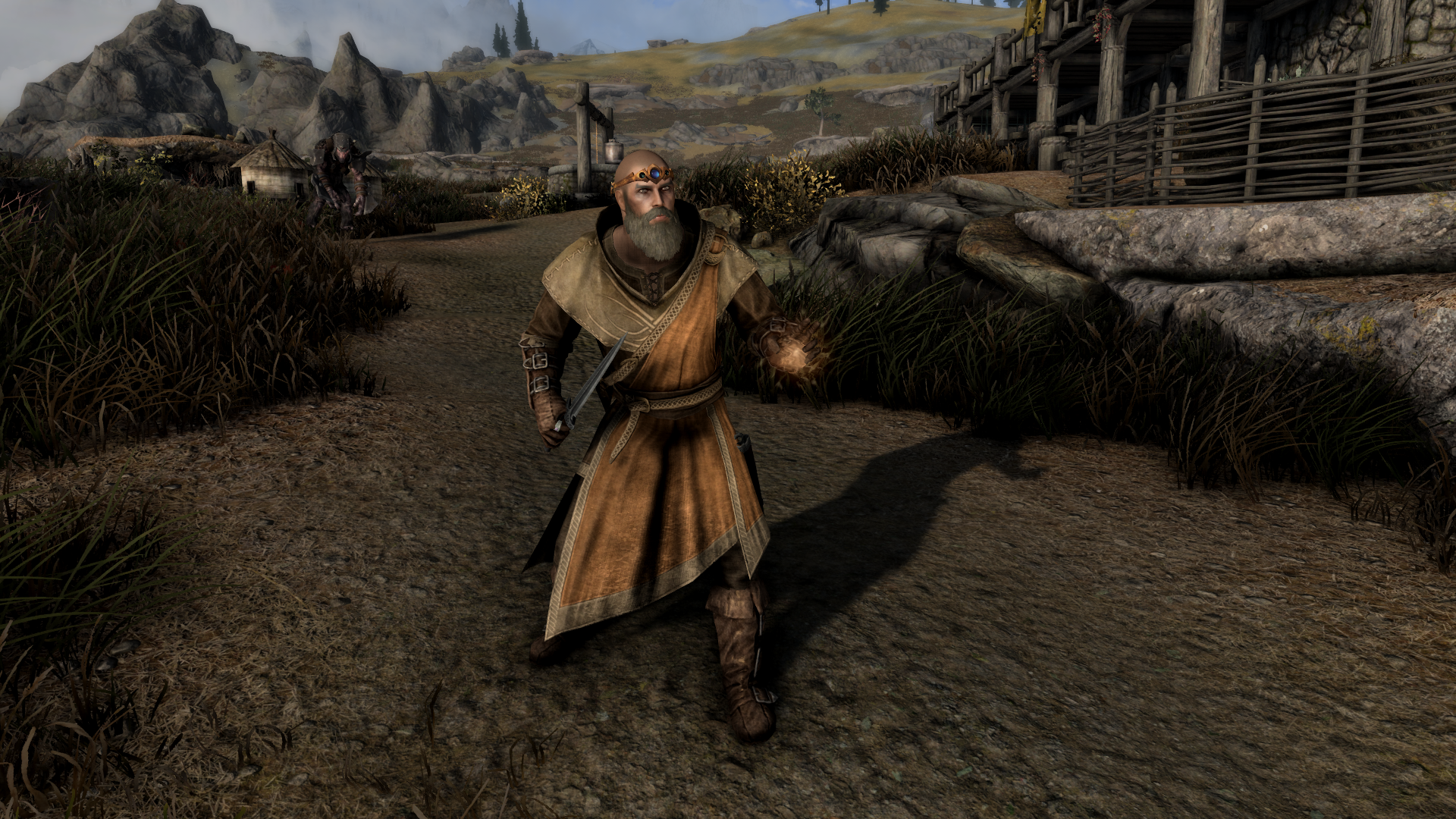
I then used console commands to add items into the characters inventory and then equip the items. If it works then great if it doesn't then I try other combinations of gear until I'm happy. If I change the gear then I do a recalculation of the armor rating.
Add Build to Build Ideas Document
I then add the image and write a bit more detail on the build into the word document along with all the other builds that I have not written up yet. Sometimes I go as far as adding the perks and enchantments but generally it's just the same or a little bit more detail than the rough notes. It stays here until I have the time to write the build fully.
Write the Build
At this point I already know what gear is going to be used and whether the damage reduction cap is going to be met or not. For most builds I pretty much always add a Fortify Restoration enchantment onto the gear and take the cost reduction perks up to Expert Restoration. Restoration is useful for all builds and more so for melee builds where it can replenish stamina for both power atatcks and for you to be able to run to your next enemy. Using Stamina for running is why I don't use vegetable soup in any of my builds as being able to run to your next target reduces the amount of damage you take from ranged attacks and speeds up the clearing of dungeons and the Respite perk with a cast of Grand Healing is significiantly better than waitng for Stamina to regenerate. The Archivist is a mage build so more attention needs to be given to the cost of spells.
Spell Cost
I start looking at the spell cost to ensure that there is enough of a reduction in spell costs to make the spells usable enough times as needed within a given time for the build. What I mean by this that if your playing a destruction mage or spellsword you are likely to be spamming these spells very often and not investing in magicka cost reduction for these spells can severely hold back the performance of the build. I basically do a check of the magicka cost associated with build using my Spell Magicka Tool. This was once a spreadsheet where I had all the spells
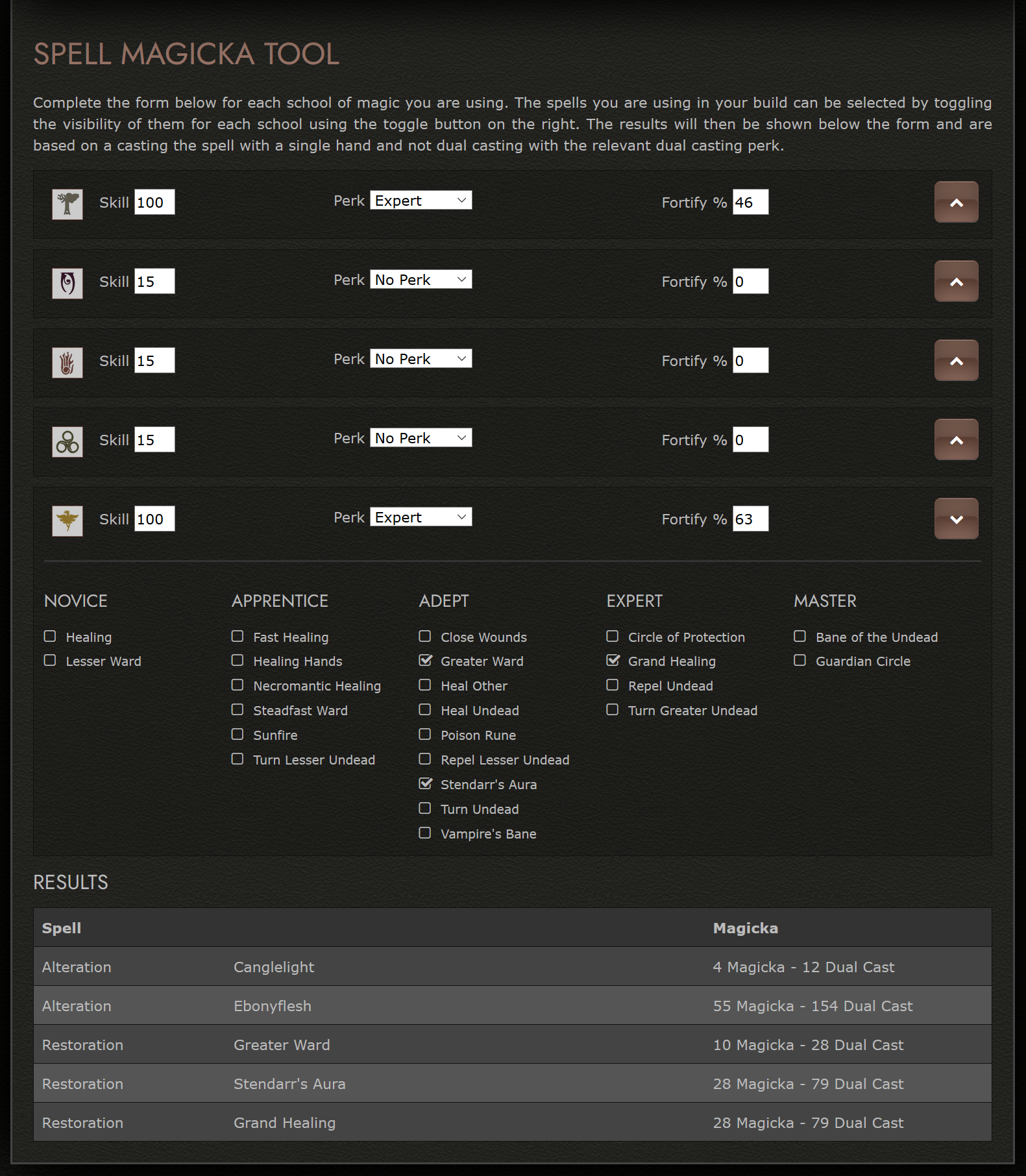
With the Archivist build using the flesh spells to reach the damage reduction cap I checked on the expert level spell Ebonyflesh as this is the most expensive version in terms of magicka cost. At 286 magicka when dual cast with the Expert Alteration perk and 100 Alteration it's a bit expensive on magicka. Although it is used once every 3-4 minutes so plenty of time to recast if you are not in combat. If you are however using other spells that are depleting your magicka while Ebonyflesh is running then you may not have enough magicka to recast it immediately when it expires and it makes sense to also add a Fortify Alteration enchantment of 46% to your gear to reduce the dual cast cost to 154 Magicka.
I did the same thing for Restoration and came to the conclusion that it could also do with a reduction in magicka cost and more so with the build using wards which can drain magicka fast. I had already decided that the Adept Robes would be in Restoration rather than Alteration because of the likely increased frequency of their use over Alteration spells so this was factored into the Spell Magicka Tool. I know what my values are for most enchantments now because I have written a lot of builds so this is something you definately need to know with your setup of the crafting gear or whether you use it at all.
Enchantments
I then start looking at the enchantments for the gear and seeing what custom enchantments I can use around any pre-existing enchanted gear such as unique gear. In the Archivist build the only unique item is in the body slot, which is an Adept Robes of Restoration so that leaves the Head, Hands, Boots, Finger and Neck slots free.
Having already determined that a Fortify Alteration and Restoration will be used to reduce the magicka costs of spells, in those schools of magic, that leaves 8 other custom enchantments. If I had determined that a Fortify Light or Heavy Armor enchantment would be needed to reach the damage reduction cap then I would have considered that here as well i terms of what was available.
In terms of weapons the Archivist is not a warrior build so I gave it a dagger and while there was no school of magic that had 100% or more magicka cost reduction in this build there was no point custom enchanting a dagger. The reason for this is that with 100% magicka cost reduction in a school of magic the spells and also the weapon enchantments of that school cost nothing. For example 100% reduction in magicka cost in Alteration means you can cast paralyze all day long without it using any magicka but also means the Paralyze weapon enchantment uses no charges, so you never need to use a soul gem to refill the weapon. This is because the spell and weapon enchantment are associated with Alteration but you have set the cost effectively to zero for this school of magic due to the 100% cost reduction. Therefore, for the Achivist I could have used a regular unenchanted dagger, but instead I decided to go for Valdr's Lucky Dagger as it has a magical effect that is not an enchantment and therefore it has no charge cost per hit.
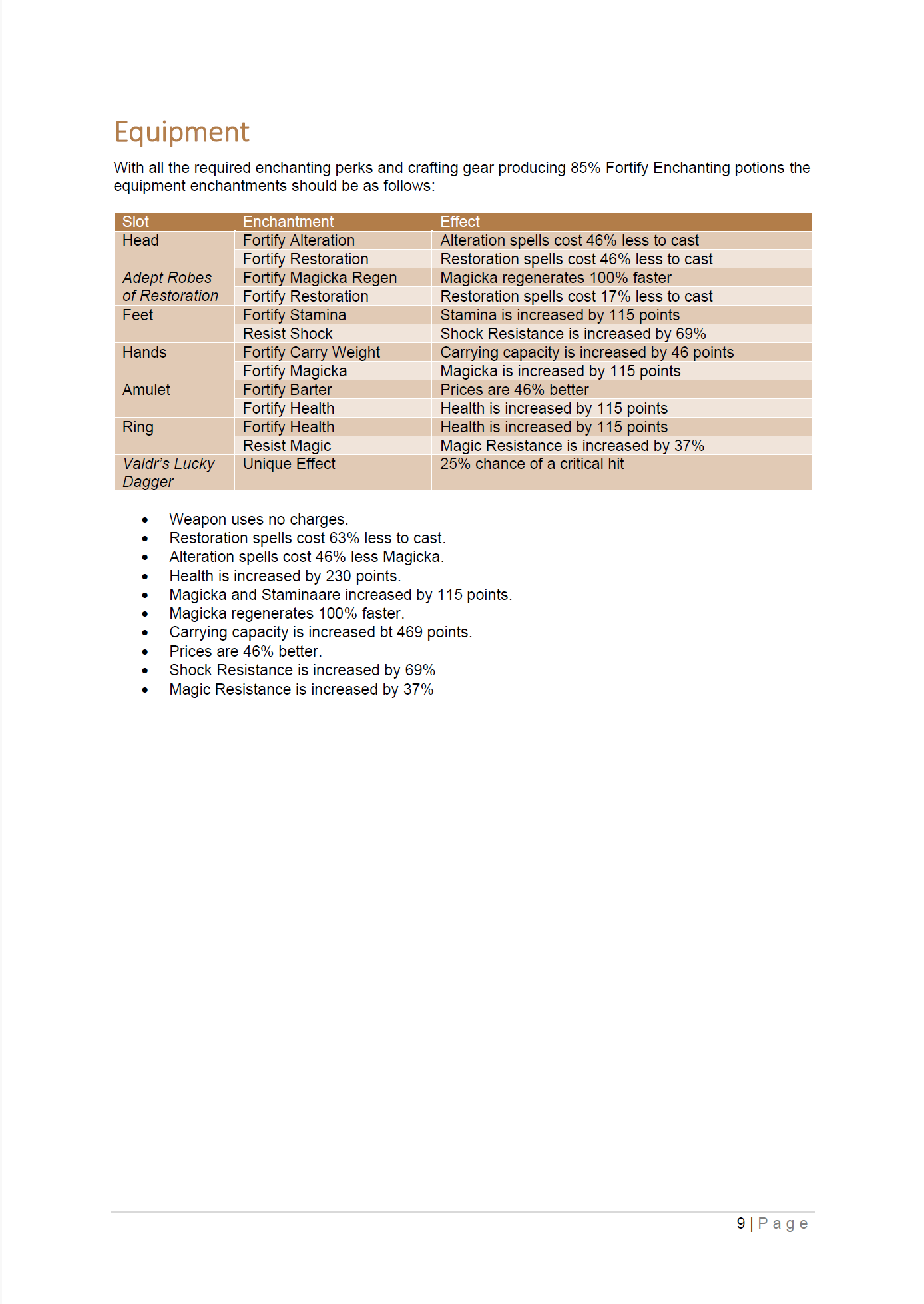
I have a spreadsheet that I use to calculate the magnitude of the enchantments and also show what enchantments are in each gear slot. I may make this into a tool for my website one day. You'll see in the image below that in the spreadsheet I highlighted the body slot to make sure I didn't add any enchantments in there as this slot is being used by the Adept Robes of Restoration.
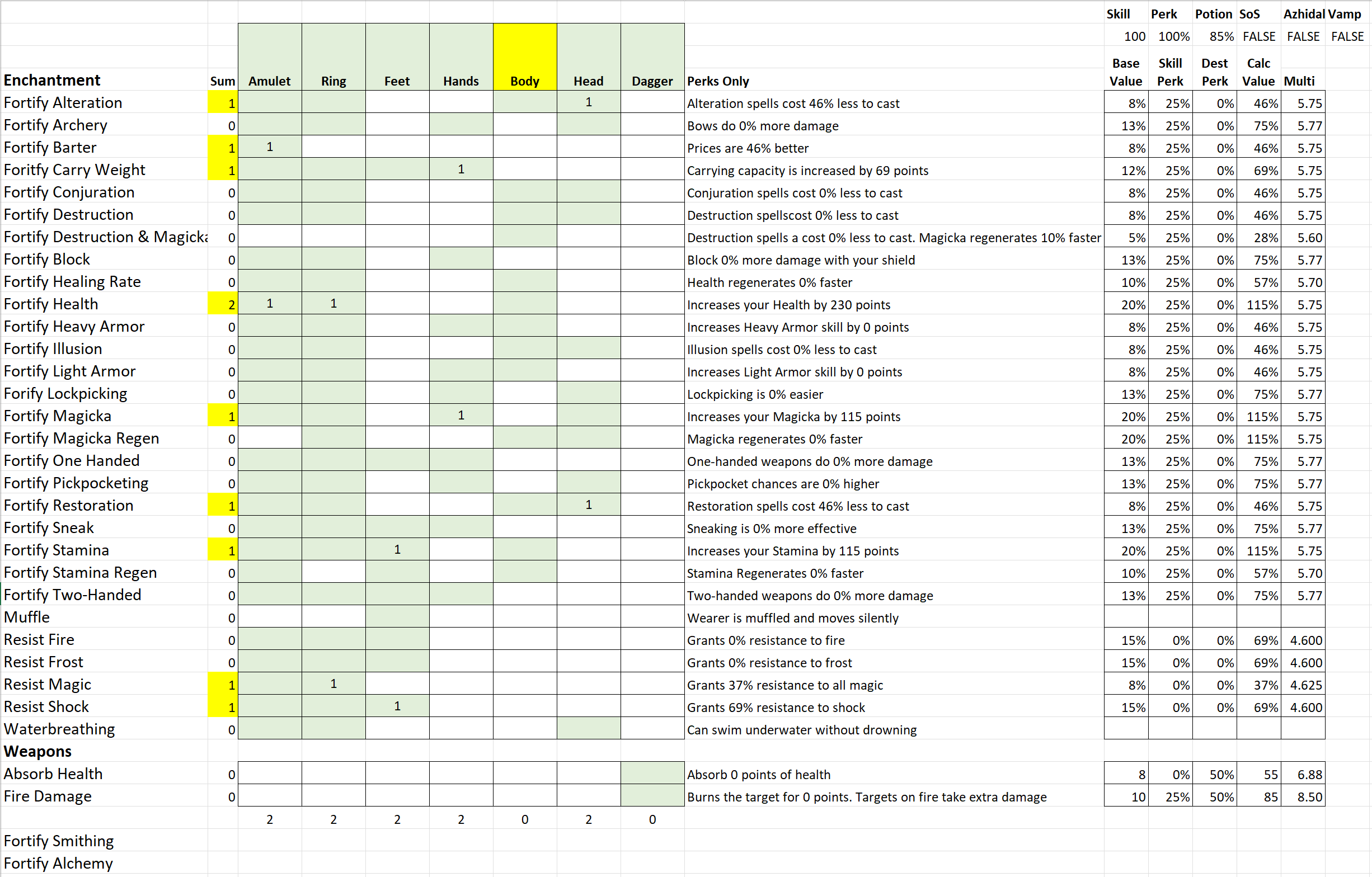
The first thing I did was pick the Fortify Alteration and Restoration in the head slot and this particular slot was used as there are only 3 enchantments of use to this build for that slot with the third being Fortify Magicka. Fortify Magicka Regen is not needed as the Adept Robes of Restoration already add 100% magicka regen and that is plenty. The Fortify Magicka was instead used on the hand slot as the only useful enchantments for that slot for this build are Fortify Magicka and Fortify Carry Weight, which is why Fortify Alteration and Restoration are on the head slot.
Looking at the hand slot again a Fortify One-handed does work for this build if you play with the Unofficial Skyrim Special Edition Patch (USSEP), because this fixes the bug where daggers do not benefit from this enchantment, but on my dagger builds I never take it so that players who do not have USSEP don't waste an enchantment slot by following my builds to the letter. Fortify Magicka and Fortify Carry Weight are going to be used as they are the only useful enchantments left for this gear slot.
With the finger and the neck slots being pretty flexible for enchantments, because they can take the majority of them, it is usually best to leave them to the end to fill in any gaps left by the other slots. This left the feet slot to figure out.
With a dagger being used and it being a mage build there would be no attribute points added into Stamina, as that would be at the expense of some Health and Magicka, so adding Fortify Stamina to the boots made sense to give a greater run duration and more power attacks with the dagger. Another Fortify Carry Weight could have been added here but on a mage build Resist Shock is very important to stop damage to your Magicka. In most of my builds I usually add Resist Shock via a potion as Glowing Mushrooms have this effect as well as Fortify Destruction so the effects of this ingredient work very well on Destruction mage and spellsword builds. The majority of weapon enchantments are Destruction based so a potion of Fortify Destruction helps boost the damage of many weapon enchantments. However, Fortify Destruction potions do not work with scrolls so for this build I added it as an enchantment instead. This also means it's a contantly running effect rather than a temporary one added by a potion. With Alchemy I decided to add Resist Fire and Frost through potions and ideally a Restore Magicka for the early game and late game emergencies.
With the build using a lot of scrolls and recipes only for conjuration spells being craftable the scrolls will have to be found or bought from vendors. This means a lot of septims will be needed to buy all those scrolls. I decided to add a Fortify Haggling enchantment to the build to compensate for this as not only will this reduce the purchase prices it will raise your sale prices of items. Fortify Haggling can only be added to the neck slot so that takes one of the two available enchantments. I also have a Resist Magic enchantment to add onto either the neck or finger slot to get close to the Magic Resistance cap as with all 3 Magic Resistance perks and the Agent of Mara power the Magic Resistance of the build is 45%. Adding a Resist Magic enchantment of 37%, which I can get with my crafting gear setup, raises this to 82% where the cap is 85%. This leaves 2 enchantments remaining and I decided to add them both as Fortify Health to make this a very robust mage build. That puts one enchentment on the neck slot and the other on the finger slot, meaning the amulet has Fortify Haggling and Fortify Health and the Ring has Fortify Health and Resist Magic.
Decide Potion and Poison Recipes
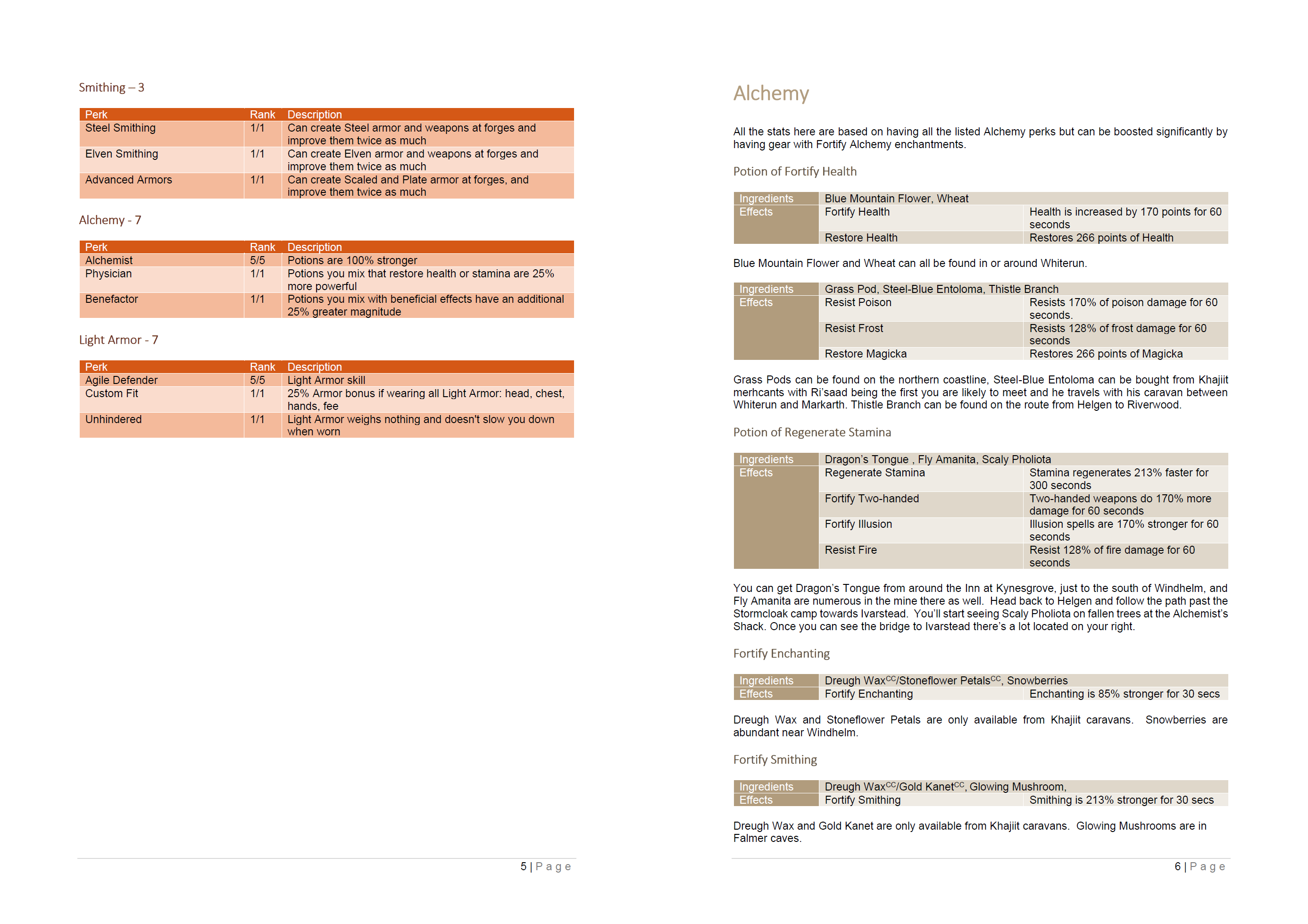
With the enchantments on the gear sorted it is time to find potions that will be beneficial to the build. I've already mentioned Resist Fire, Resist Frost and Restore Magicka being desired effects from potions and there is a very useful plantable ingredient that adds both Resist Frost and Restore Magicka which is Steel-Blue Entoloma. There's also Snowberries that have Resist Frost and Resist Fire as another plantable ingreident. However, I could not get them working together to get all 3 effects in a single potion so I split them into two and looked for additional effects that would be beneficial or just additonal effects to raise the sale price of the potions to get those septims in to buy scrolls.
I focuses on the Steel-Blue Entoloma first for the Resist Frost and Restore Magicka and after playing around with my Farming Alchemy tool I came up with the following potion
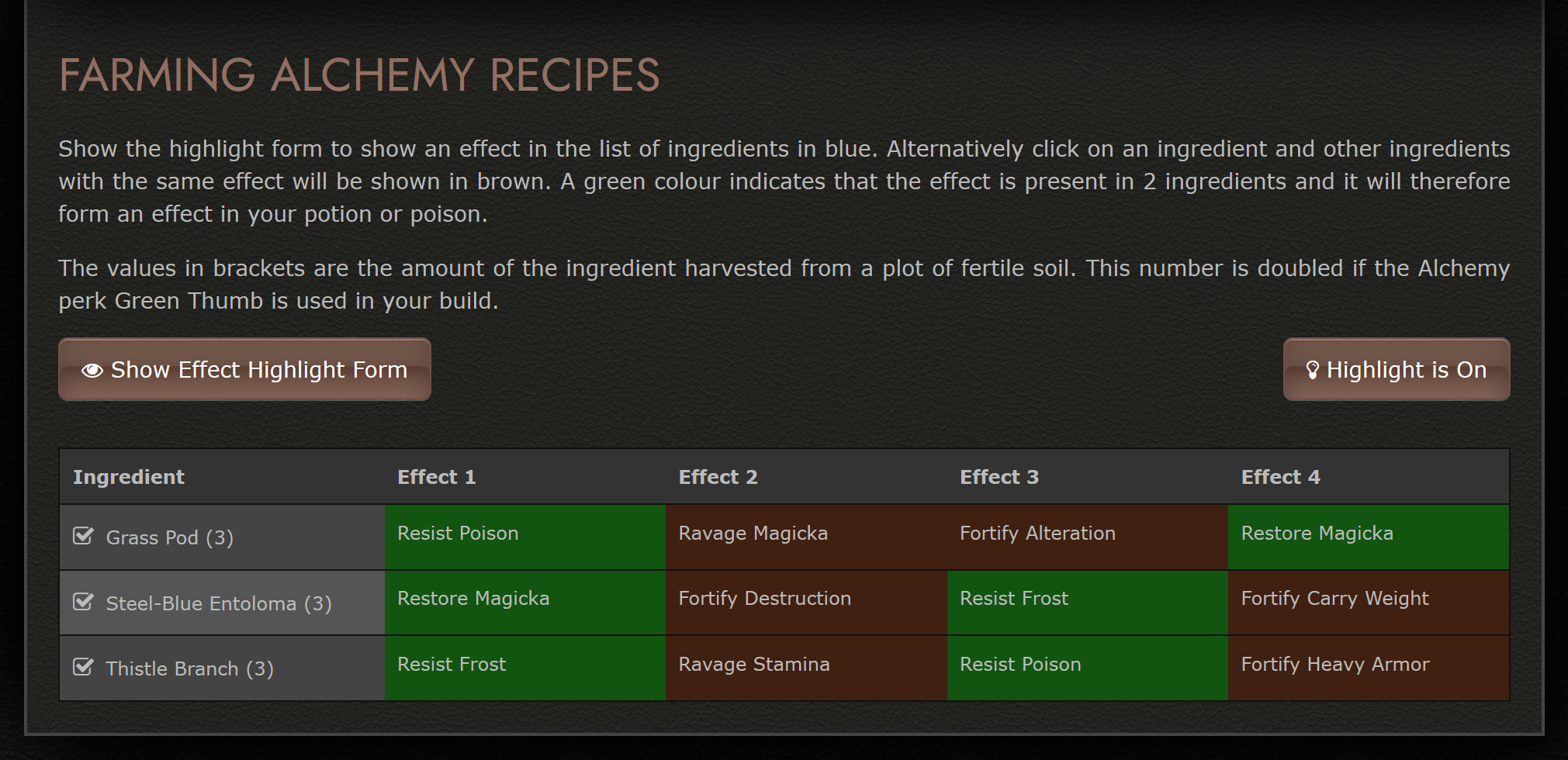
I could have used Steel-Blue Entoloma, Snowberries and Creep Cluster to get Fortify Carry Weight instead of Resist Poison but decided to go for better defences instead.
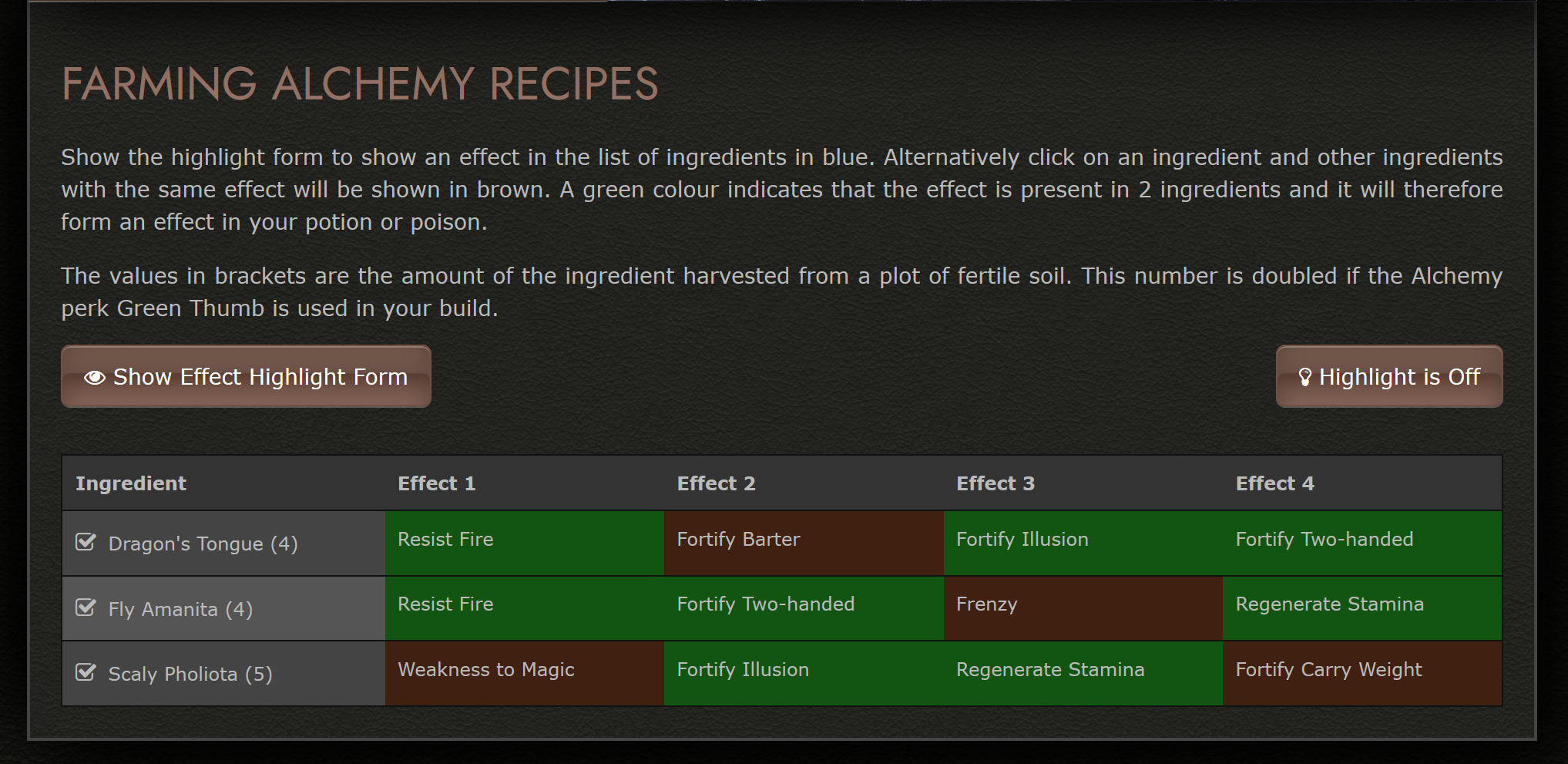
In looking at Resist Fire there were only 3 plantable ingredients with that effect and 2 of them are in a well known 4 effect Fortify Two-handed potion, so I decided to do that as although the build boosts Two-handed damage, which is useless for the Archivist, and also Fortify Illusion, which as the potion effect doesn't work with scrolls, it does add Regenerate Stamina and that is useful for the build as stamina drain from running or power attacks with the dagger will replenish quicker. The 4 effects from this potion also increase the sale price to get those septims coming in.
Planting for the Farm
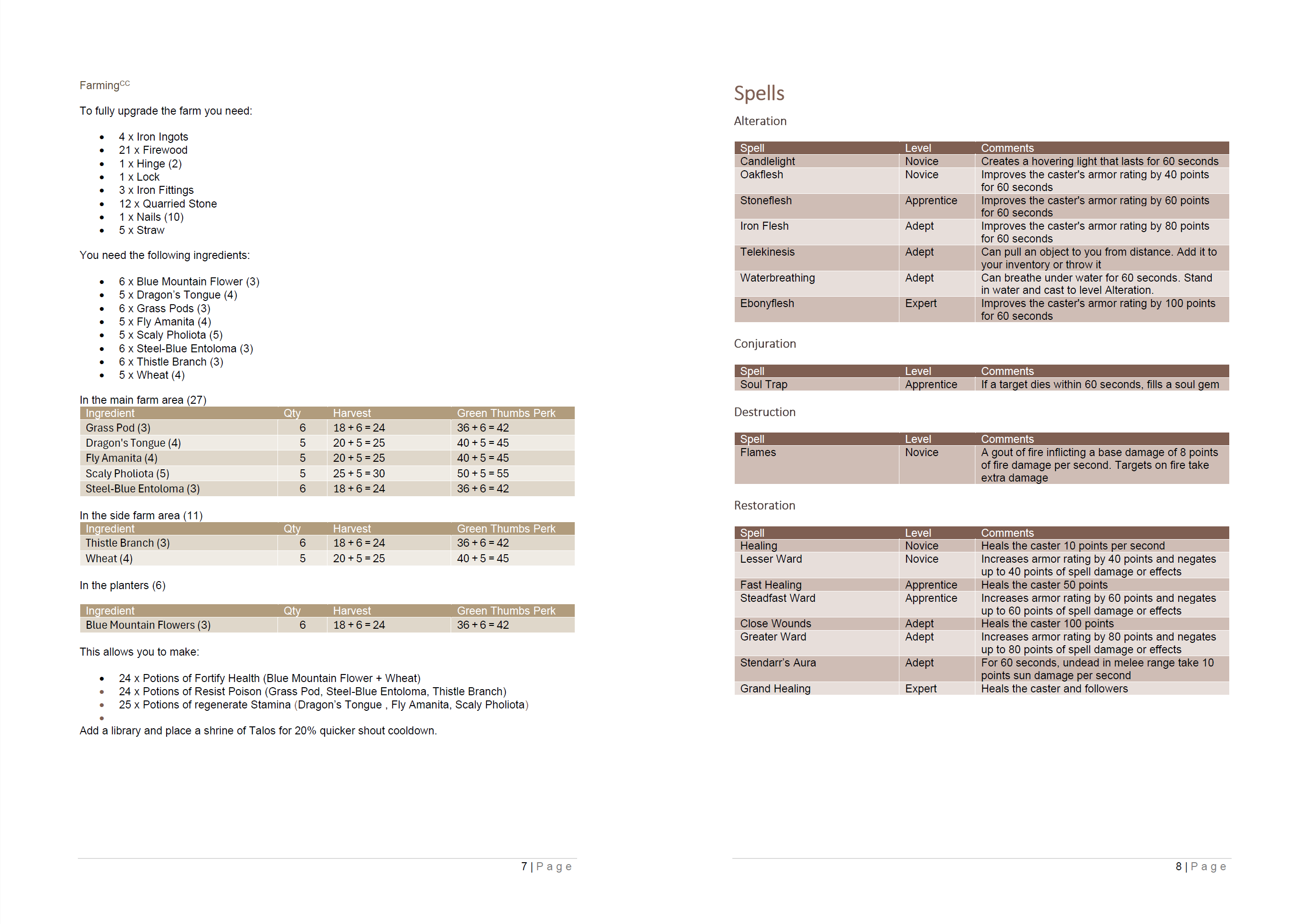
I have a spreadsheet that helps me work out what quanity of each ingredient I should plant and it populates a table for me so that I copy the row of each ingredient into the Word document for the build. This allows me to check that I have an ingredient in each plot before I get to Goldenhills Plantation in my playthrough and have to figure it all out then.
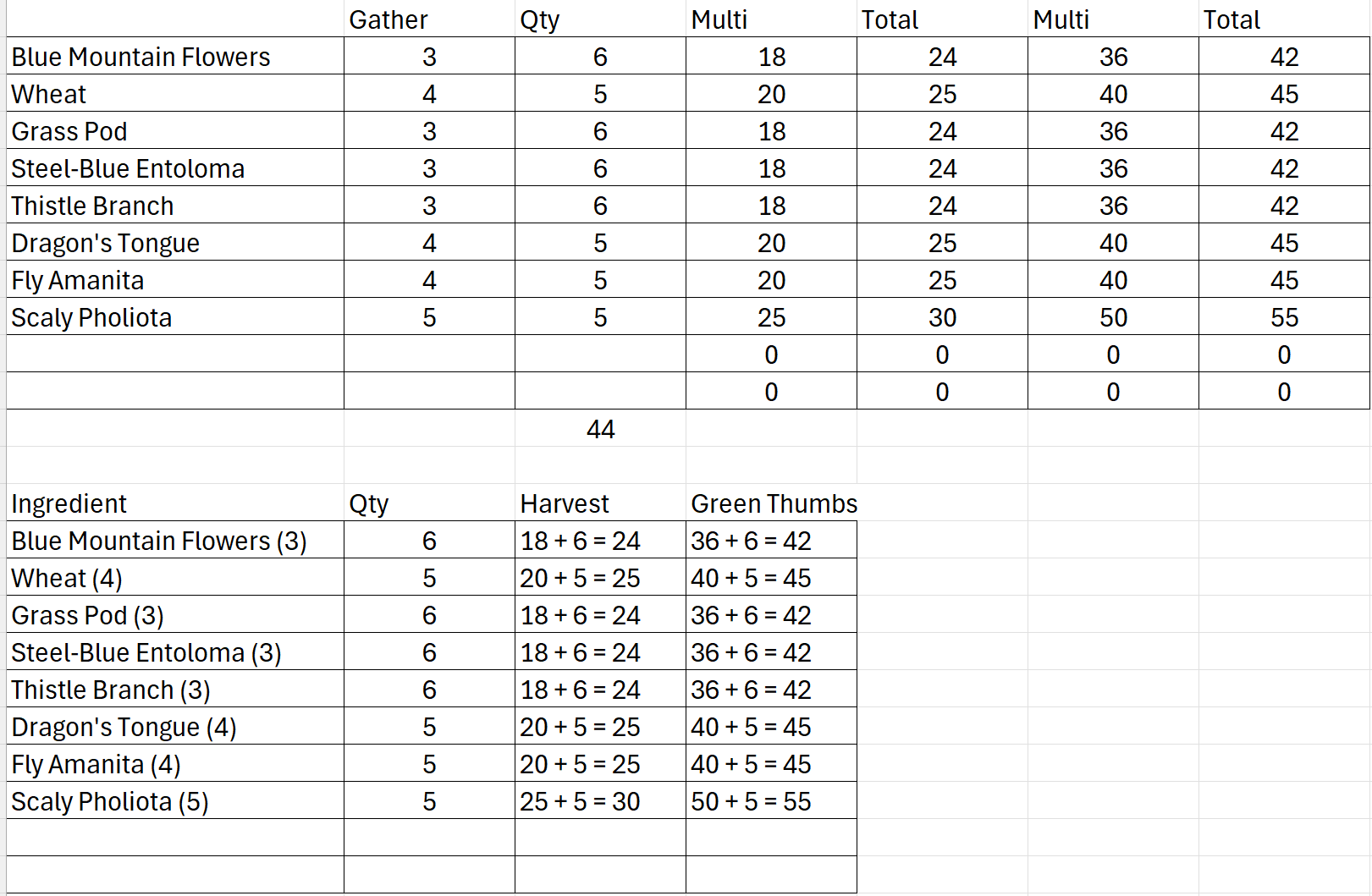
For the first of the potions it's the first two rows, which are my usual Fortify Health and Restore Health potions of which 24 can be made per harvest. The next 3 rows are for the Resist Frost potion. And the last 3 are the Resist Fire and Regenerate Stamina potions. This gives 24 or 25 of each potion per gathering session at the farm. I added an extra Scaly Pholiota as I had a plot of fertile soil left and it's the rarest of the ingredients for the third potion. Even if you don't own Tundra Homestead you can plant ingredients in the 8 fertile plots behind it and go gather the ingredients there every 3 days if you are a little short on something at the farm for your build.
Pick a Race
Some builds are based on a very race specific premise and there's no deviating from that race to to get a build to work lore wise. Other times you have a lot of choice between the races and picking what looks cool works. If I'm nore sure I use my Race Selector Tool to highlight whihc race gets the biggest skill point boost at the start. This only makes a very minor diffrence in the first few levels so considering the racial powers and passive abilities is often the decider for me.
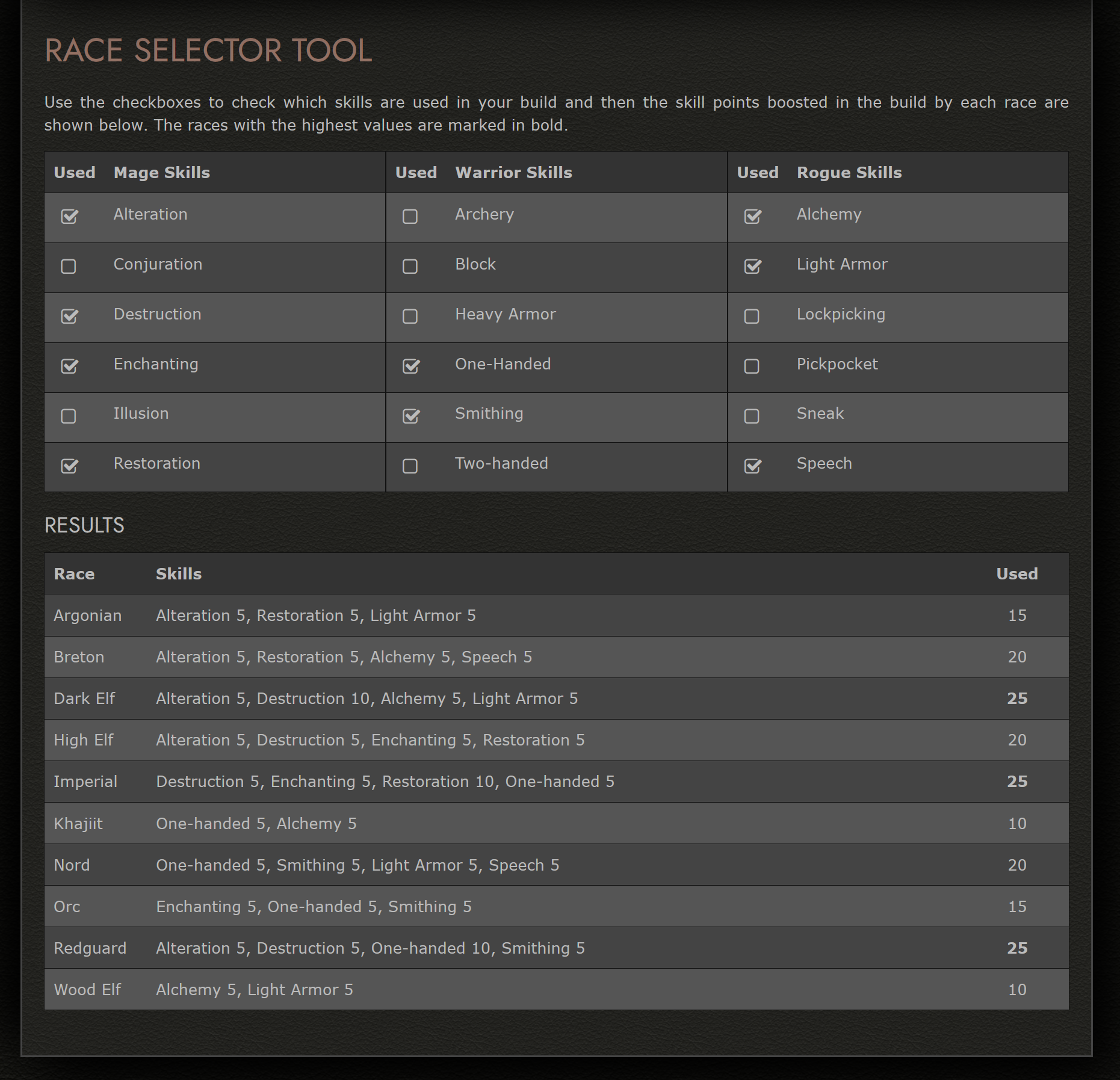
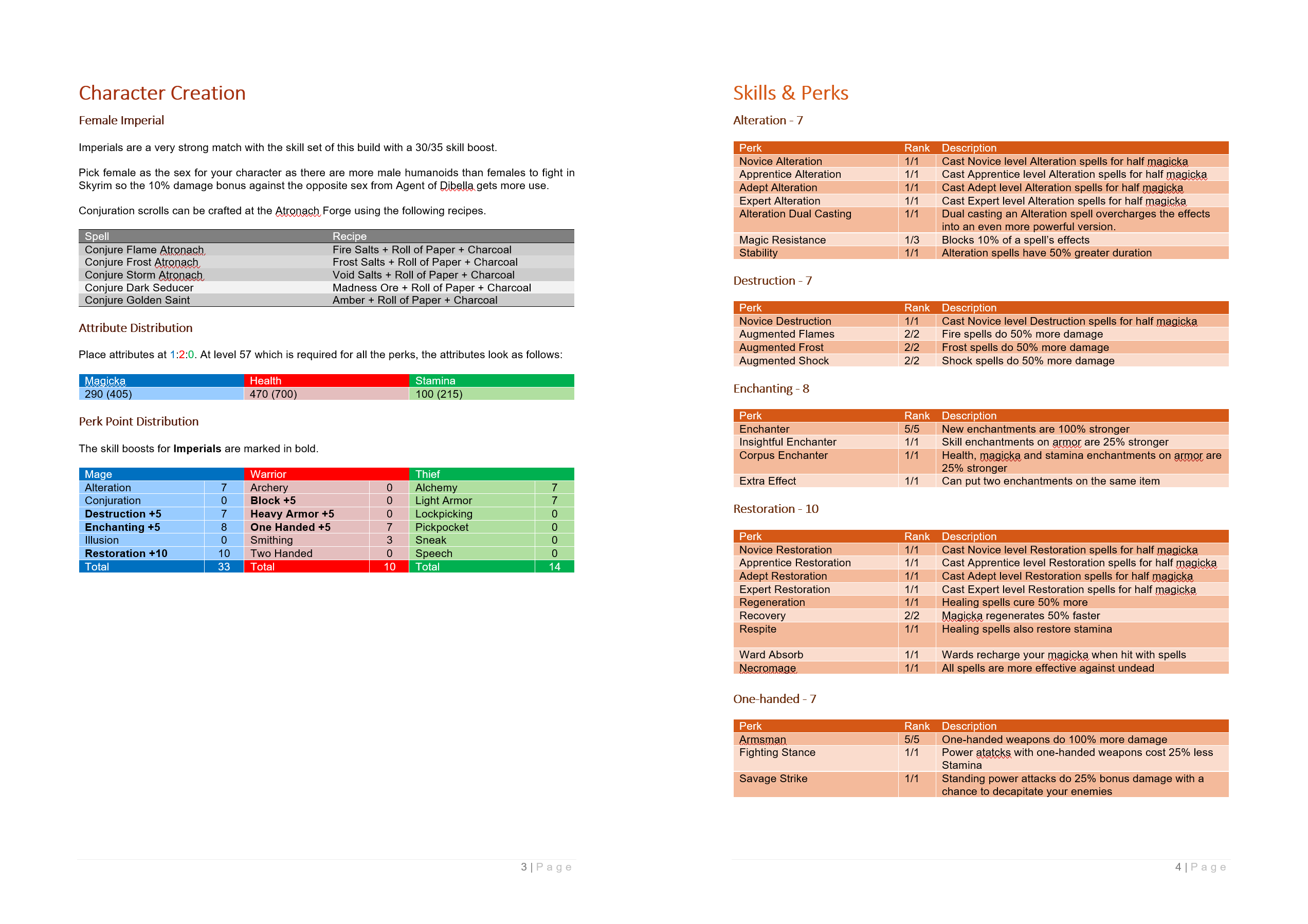
For the Archivist build Dark Elf, Imperial and Redguard have the highest skill boosts. Dark Elf have Fire Resistance and a flame cloak ability once a day. The former is covered by a potion and latter although useful cannot be used at a frequency to make it more than siutationally useful. Redguards do have Resist Poison but again this is covered by Alchemy. Imperials have a once a day calm ability that is situationally useful and a passive a ability that gives them slightly more septims from looting, although this is bugged and all races get it, depending whether you have fixed this with a mod or not. I decided to go with an Imperial as a scholar travelling from Cyrodil felt the closest match for the build.
Attributes
I usually place attributes a 2:1 with 2 being Health and 1 being either Stamina or Magicka, whichever is the most important to the build. This is because I play on legendary difficuly so a high Health helps with enemies doing 3 times damage and you only doing a quarter. I went with Magicka with this being more of a mage rather than a warrior build, although it will play more as a warrior in the early game with less money and therefore less scrolls.
Perks
There are certain things that will already have been established by this point in writing a build such as what perks are needed in Alteration. for example on Breton builds the passive 25% Magic Resistance means 1 rank of the Magic Resistance perk as that's 10% + 15% from Agent of Mara + 37% from a Magic Resistance enchantment (25 + 10 + 15 + 37 = 87) and for other builds it's 3 ranks of Magic Resistance (30 + 15 + 37 = 82). If a build also uses Conjuration spells that do get absorbed with spell absorption then I usually have the Lord Stone which adds 25% Magic Resistance and 50 Armor Rating. Generally I take the Atronach Stone over the Lord Stone as with the Atronach perk this gives an 80% chance to absorb a magical effect and this is not only elemental damage but also diseases and poisons.
In Restoration I usually take perks up to Expert Restoration to make Grand Healing cost less, 2 ranks of Recovery for 50% magicka regen and Regeneration for better heals. Respite is taken on melee builds as it rapidly replenishes your Stamina. Necromage is useful on any mage build to boost either the damage of Destruction spells, The effective level of Illusion spellswith the Master of the Mind perk to boost the effect level of spells and holy warrior builds with say a paladin feel to them.
For the Archivist build it's a mage build that occasionally uses a dagger and it will do so a lot more frequently in the lower levels so I treated it as both a Restoration mage and a melee build and added the Respite and Necomage perks. Wards also form part of the core spells used by the build so Ward Absorb was taken to replenish Magicka from blocked spells.
The Augmnented perks in Destruction do work with scrolls so all 6 perks were taken to boost Fire, Frost and Shock scrolls.
One-handed for the dagger was just the standard 7 perks to boost the damage with 5 ranks in Armsman, Fighting Stance to lower the Stamina cost of power attacks and Savage Strike to give a 25% damage boost on standing power attacks and also the chance for a decapitation finishing move.
The number of ranks in the Agile Defender has already been identified as 5 and then Custom Fit is needed to get Unhindered which slightly improves movement speed and reduces the carry weight of the build slightly.
Lastly the crafting perks were taken, where the 8 from Enchanting and 7 from Alchemy to get the crafting gear mage and then the 3 from Smithing to get Advanced Armors to double the Effective Smithing Skill level on the Dawnguard Boots and Gauntlets.
Summary
All of this information is then added into a template document that I have and then then this document, the image for the looks and the enchantments spreadsheet get added into a build folder. This gets dropped into a playtest folder, which is where I go once I've finsihed playtesting a build to pick the next one to play. Sometimes I do tweaks to the builds as things are not going as smoothly as they should but generally I make very minor changes when play testing.